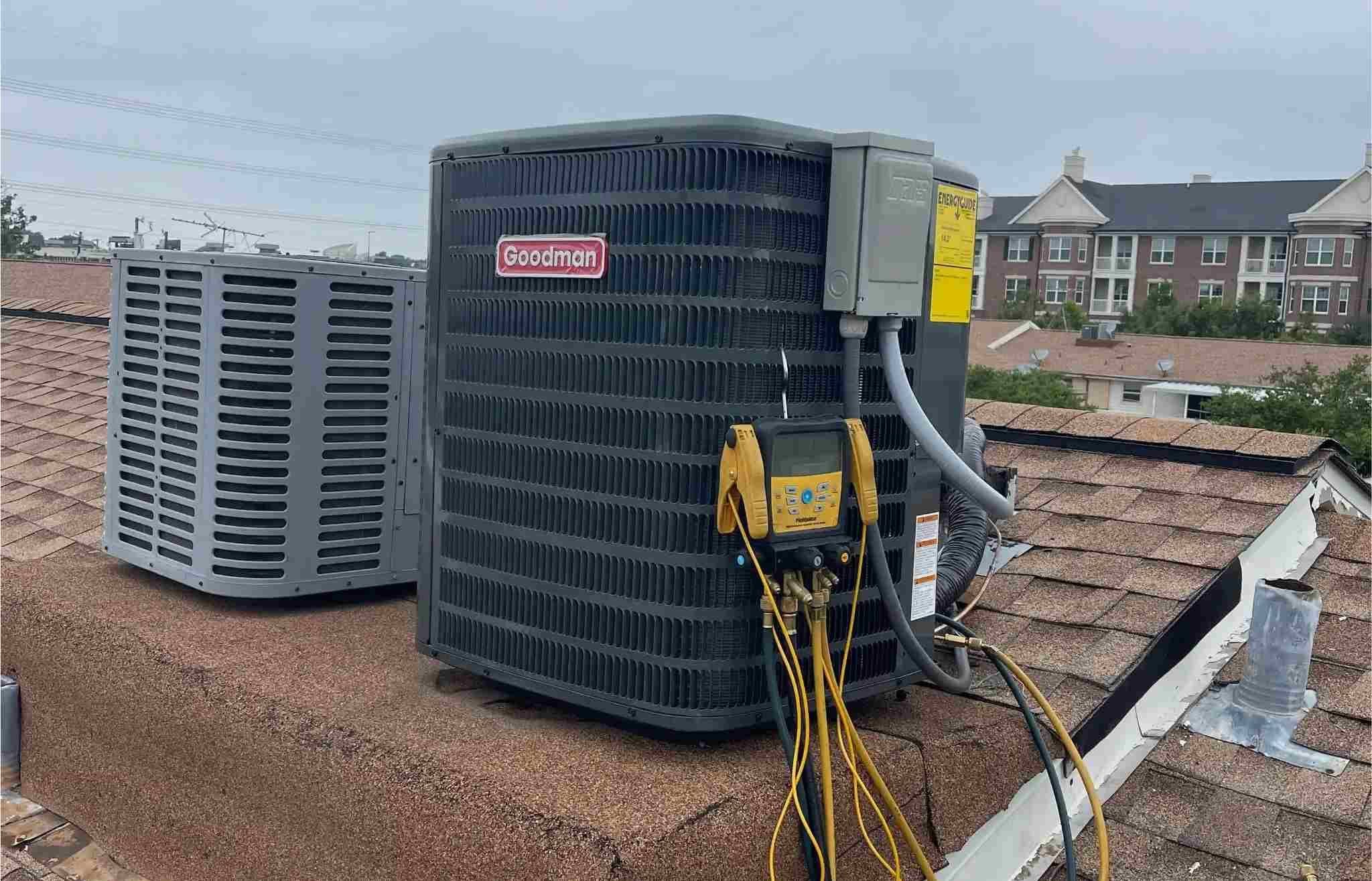
Why Proper HVAC Installation Matters More Than Price
Professional HVAC installation ensures optimal efficiency, long-term savings, and reliable comfort—proving that quality matters more than the lowest price.
Team Enoch
March 21, 2026
You did everything right.
You compared brands. Checked efficiency ratings. Read reviews. Got multiple quotes. Picked a contractor that saved you money.
The system gets installed… and at first, everything seems fine.
Then reality hits:
Here’s the truth most homeowners don’t hear:
It’s not the HVAC system. It’s the installation.
In 2026, this matters even more than ever before. Modern HVAC systems are highly advanced, but that also means they are less forgiving of installation mistakes. Even a high-end system will underperform, break down early, and waste energy if it’s not installed correctly.
Most homeowners think HVAC installation just means “putting in a new unit.”
That’s only a small part of it.
HVAC installation is a complete process that includes:
In simple terms:
It’s not just installation — it’s engineering + setup + performance tuning.
This is why two homes with the exact same system can have completely different results.
This is where most homeowners get it wrong.
They focus on:
But ignore the most important factor: who installs it and how.
A poorly installed HVAC system can:
Most manufacturers require proper installation and registration. If something goes wrong due to installation errors, you may have to pay out of pocket.
Modern systems in 2026 — especially inverter-based heat pumps — are designed for high efficiency.
But here’s the catch:
They only deliver those savings if they are:
Otherwise, your “high-efficiency” system becomes just an expensive underperformer.
When installation is poor, you experience:
Short-cycling:
This means the system turns on and off too quickly without completing a full cycle.
Uneven airflow:
Poor indoor air quality:
A properly installed system:
Improper installation leads to:
Result: frequent breakdowns and higher maintenance costs.
This is one of the most important — and most misunderstood — steps.
A Manual J calculation is a detailed analysis used to determine:
It considers:
Why it matters:
Without it, contractors are just guessing.
And guessing leads to:
Your ductwork is like the “delivery system” for your HVAC.
If ducts are:
Then:
In 2026, proper duct sealing and testing is no longer optional — it’s essential.
Modern HVAC systems now include:
These systems require precise calibration.
If not configured correctly:
Many homeowners think they’re paying for equipment.
In reality, a large portion of your cost is:
Important insight:
Installation quality is what you’re really paying for — not just the unit.
A premium installer ensures:
Let’s break this down clearly:
Improper airflow or refrigerant issues force your system to work harder.
Components wear out faster due to stress.
Early breakdowns become common.
Over time, a bad installation can cost thousands more than doing it right the first time.
This is a growing concern in 2026.
High MERV filters (11–13):
Variable-speed systems:
Air purification add-ons:
Important:
Even the best allergy system won’t work if airflow is poorly designed — again, installation matters.
This isn’t just a technical change — it affects homeowners directly.
In 2026, choosing a system with R32 + proper installation = long-term savings.
In 2026, HVAC systems are smarter, more efficient, and more advanced than ever.
But they are also more dependent on proper installation than ever before.
You’re not just buying equipment.
You’re investing in:
And all of that depends on one thing:
The quality of the installation.

